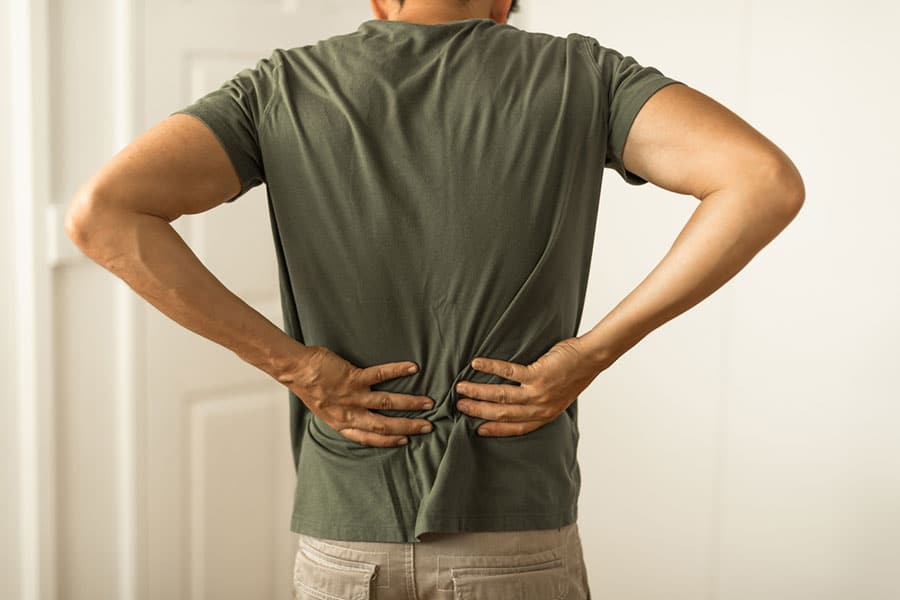
Lumbar disc herniation is a frequent underlying cause of low back pain — a condition that affects about 610 million people globally today and is expected to affect 843 million people by 2050, says the World Health Organization.
As one of the most common reasons people seek medical care, lumbar disc herniation can result in pain, numbness, or weakness. Knowing what this debilitating condition is and how you can find relief, perhaps through regenerative medicine in Michigan, is the first step.
A Look at Lumbar Disc Anatomy
The lumbar spine is the lower portion of the back made up of vertebrae stacked on top of one another. Between each vertebra sits an intervertebral disc that acts as a cushion and shock absorber for your spine.
Each disc contains two main parts:
- The outer ring (annulus fibrosus): This is a tough, fibrous layer that adds structure to the area.
- The inner core (nucleus pulposus): This is the softer, gel-like center that makes flexibility and movement possible.
When your discs are healthy, they evenly distribute pressure, which in turns gives the spine the mobility it needs to bend, twist, and support body weight.
When a lumbar disc herniation occurs, the inner portion of the disc pushes through a weakened or damaged area of the outer ring – either gradually over a long period of time or after a sudden injury or strain.
Also known as “slipped” or “bulging” discs, herniated discs can irritate the nerves and cause debilitating pain.
Top Causes of Lumbar Disc Herniation
Many things can cause disc herniation, including:
- Age-related disc degeneration
- Poor posture or body mechanics
- Repetitive lifting, bending, or twisting
- Sudden trauma or injury
- Excess body weight that increases spinal stress
Once your discs start to lose elasticity and hydration over time, the risk of damage increases.
The Connection Between Herniated Discs and Back Pain
You feel pain when the herniated disc material irritates or compresses nearby spinal nerves, which make their way through the lower back into the hips, legs, and feet.
As a result, you may feel the following symptoms especially when bending, sitting or standing for long periods of time:
- Localized low back pain
- Radiating leg pain (sciatica)
- Muscle weakness
- Numbness or tingling
That said, not everyone with a disc herniation feels these symptoms. Sometimes it’s discovered accidentally on imaging for another problem.
Mild cases may cause on-and-off discomfort; more severe cases may compromise the ability to walk, sleep, or perform daily activities.
Diagnosis
Diagnosis of a lumbar disc herniation starts with a thorough physical examination and review of symptoms. Your doctor may send you for an MRI to confirm nerve compression. Only through accurate diagnosis can the most appropriate treatment approach to your pain be recommended.
Non-Surgical Treatment Options
Many cases of lumbar disc herniation improve with rest, physical therapy, and activity modification. However, if your symptoms persist or keep coming back after periods of improvement, it may be necessary to explore options that reduce inflammation and support tissue health.
Regenerative medicine in Michigan is one such option – without the need for invasive surgery. Rather than masking symptoms, regenerative medicine technique such as platelet-rich plasma (PRP) can embrace the body’s natural healing response using the patient’s own organic material.
Contact the Regenerative Medicine Institute of Michigan
If low back pain, sciatica, or nerve-related symptoms are affecting your quality of life, come to our pain specialists in Michigan for a comprehensive evaluation to determine if regenerative treatments are appropriate for your condition. We welcome you to contact us today at (248) 771-1300 to book a personalized assessment.
By Regenerative Medicine Institute of Michigan
Board-certified Doctors – Aaron Greenberg, DO and Eduardo José Otero Loperena, MD